AI-Powered Research Tools
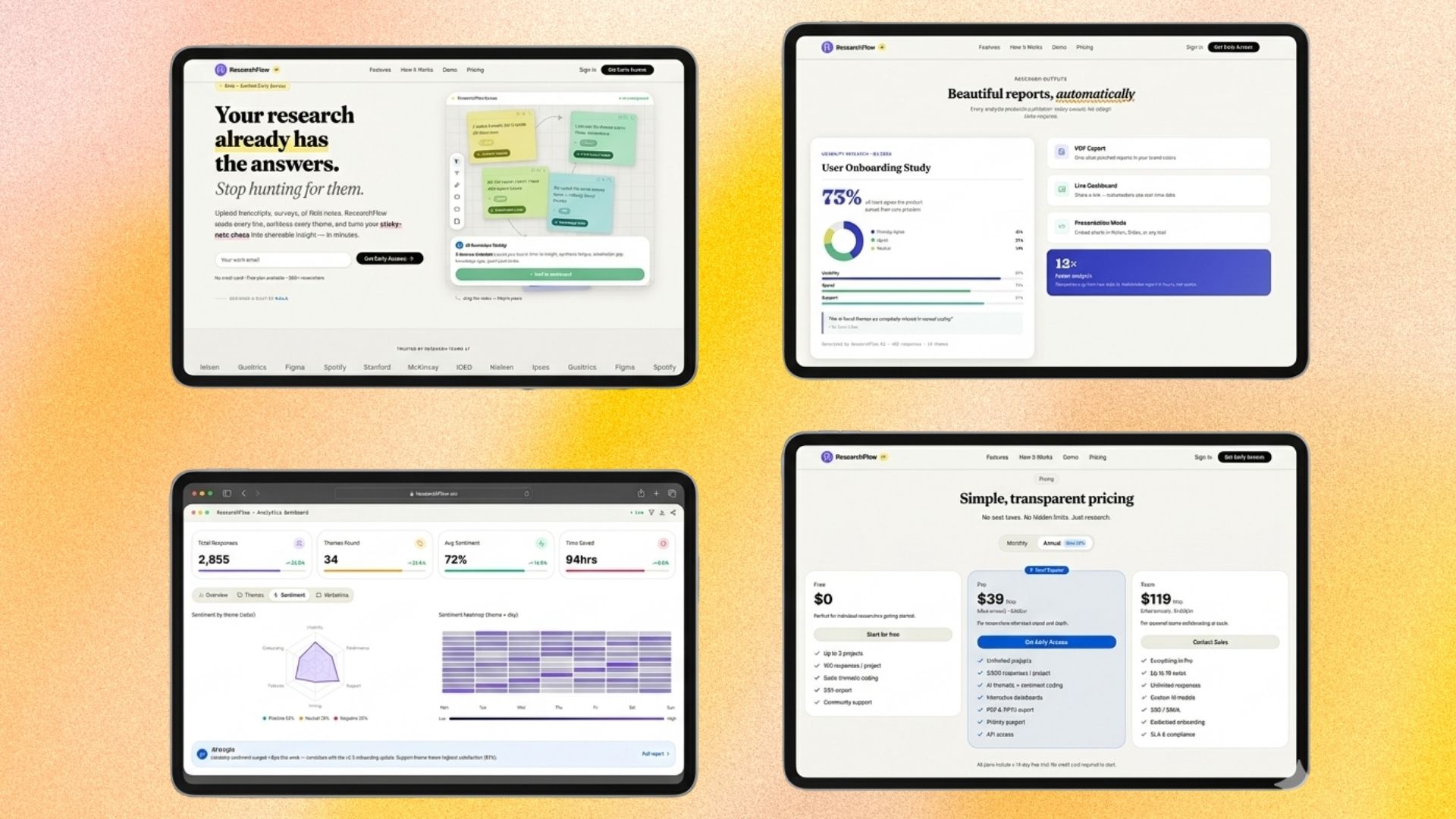
ResearchFlow - AI Research Analysis
Building an AI platform that transforms messy research data into structured insights
ResearchFlow is an AI-powered research analysis platform designed for qualitative and mixed-methods researchers. It reads transcripts, surveys, and field notes, then surfaces themes, codes data, and turns sticky-note chaos into shareable, structured insights. Built from firsthand frustration with manual qualitative analysis workflows during my own research projects.
Born from the gap between how researchers actually work (messy, iterative, human) and the tools available to them (rigid, slow, disconnected).
Qualitative research analysis is powerful but painfully slow. Researchers spend weeks manually coding transcripts, building affinity diagrams, and synthesizing themes across dozens of data sources. Existing tools like NVivo and Atlas.ti are expensive, complex, and designed for a pre-AI era. Meanwhile, general-purpose AI tools like ChatGPT lack the structured workflows researchers need.
40-80+
Hours spent on manual coding per study
$800+/yr
Cost of existing QDA software
73%
Researchers wanting AI assistance
How might we use AI to accelerate qualitative analysis without sacrificing the rigor and human judgment that makes it valuable?
Pain Point
Personal Frustration
During my CHORA and Wrapped research projects, I spent weeks manually coding interview transcripts and building affinity diagrams. The repetitive parts of analysis were begging for automation.
Research
Understanding the Landscape
Surveyed existing QDA tools (NVivo, Atlas.ti, Dedoose) and AI writing tools. Found a clear gap: no tool combined AI-powered analysis with researcher-friendly workflows.
Design
Designing for Researchers
Created a workflow that mirrors how researchers actually think: upload data, let AI suggest initial codes, review and refine, then synthesize into themes. Human judgment stays central.
Build
Full-Stack Development
Built with Next.js, TypeScript, and Supabase. Integrated OpenAI API for intelligent coding suggestions, theme extraction, and cross-source synthesis.
Launch
Deploy & Iterate
Deployed on Vercel with continuous iteration based on researcher feedback. Built features for transcript upload, AI-assisted coding, theme visualization, and exportable reports.
AI assists, humans decide
AI suggests codes and themes, but the researcher always has final say. No black-box analysis.
Meet researchers where they are
Upload transcripts, surveys, or field notes in any format. No rigid data structures required.
From chaos to clarity
Transform unstructured qualitative data into organized, shareable insights with visual theme maps.
Accessible pricing
Built as an alternative to $800+/year enterprise tools, making qualitative analysis accessible to students and independent researchers.
Building for yourself first
Starting from my own research pain points ensured the product solved a real problem. Every feature was tested against my own workflow before shipping.
Full-stack product development
Took ResearchFlow from concept to deployed product: design, frontend, backend, AI integration, database, authentication, and deployment.
AI as a research tool
Learned how to prompt-engineer for academic rigor - making AI suggestions that are helpful without overstepping the researcher's interpretive role.
Shipping is a skill
The gap between a working prototype and a deployed product is enormous. Learned to make pragmatic tradeoffs and ship iteratively.